
U.S. Tariff Turbulence: How Trump's New Tariff Hike Impacts Airfreight and Global Trade
Invalid date
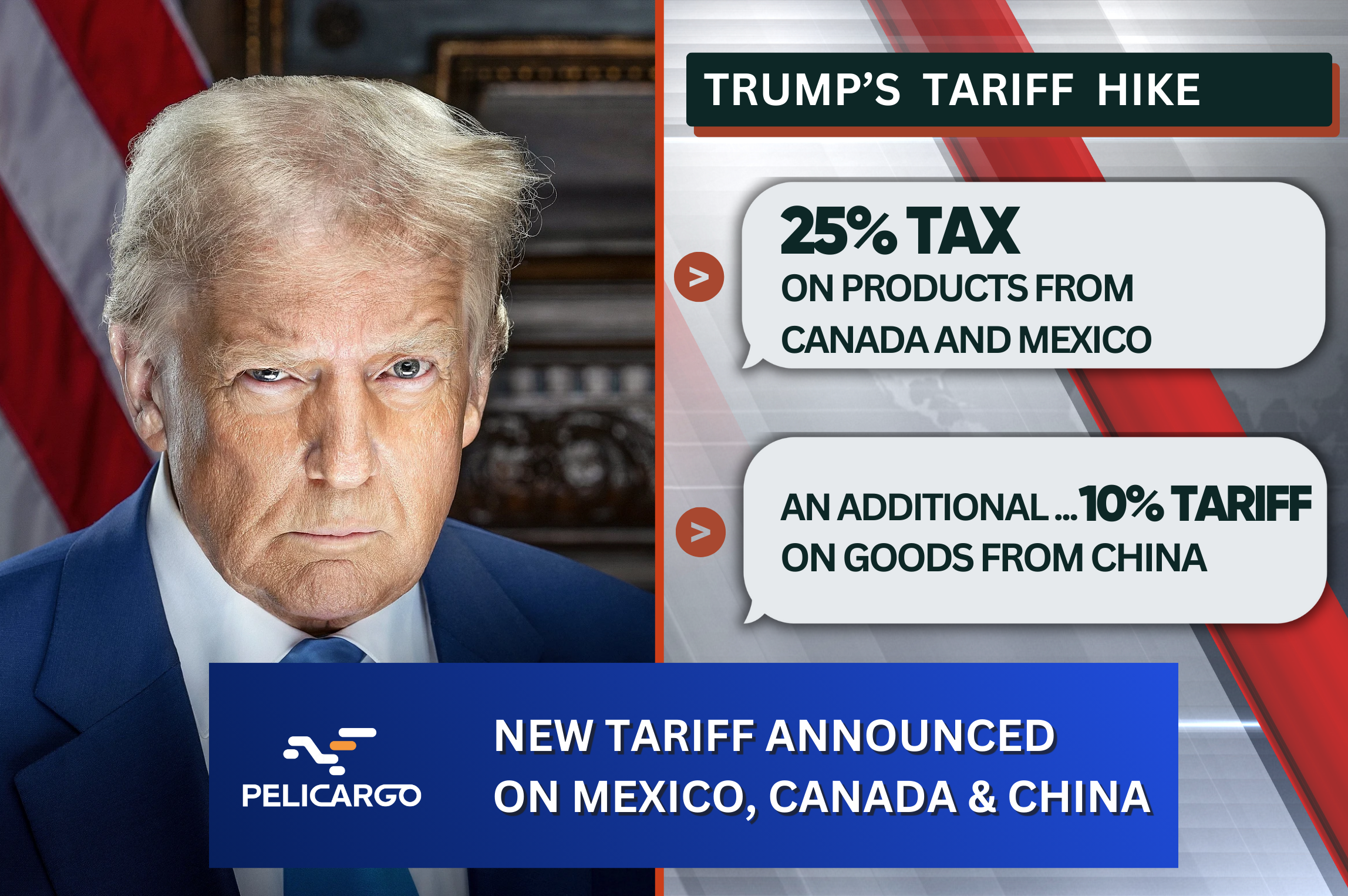
(Feb. 4) Update: President Trump has reversed course on the 25% tariff hikes and de minimis suspensions for Mexico and Canada, following commitments from these nations to bolster border security. Stay tuned for more developments!
(Feb. 3) Over the weekend, President Trump announced new tariffs on China, Canada, and Mexico, and there are signs that the trade war may be just getting started—with potential restrictions looming for EU countries as well. With so much uncertainty about how these changes will ripple through global markets, our expert team at Pelicargo set out to explore what this might mean for air freight.
Here are some potential outcomes you don’t wanna miss:
1. Shifts in Trade Volumes and Patterns
-Reduced Import Volumes: When tariffs drive up the cost of imported goods, companies might import less or turn to alternative sources. This shift could lower the demand for time-sensitive air freight shipments in sectors like high-value electronics, pharmaceuticals, perishables, etc.
-Supply Chain Restructuring: To adapt, businesses may reorganize their supply chains by boosting domestic production or sourcing from regions unaffected by tariffs. While these changes won’t happen overnight, they could gradually reshape the flow of air cargo across different regions.
2. Modal Shifts and Freight Cost Dynamics
-Air vs. Sea Freight: Tariffs can force companies to rethink their shipping options. Although sea freight is usually less expensive, air freight is often preferred for its speed and reliability. When tariffs drive up costs or cause delays in manufacturing and shipping, businesses may choose air freight—even with its higher per-unit costs—for valuable or time-sensitive goods.
-Passing Costs to Customers: As tariffs push up overall expenses, those extra costs might eventually be passed along the supply chain. Yes, this means air freight carriers could face pressure to increase their rates or renegotiate contracts, potentially squeezing their margins in competitive markets.
3. Potential Delays in Delivery Due to Customs Implementation Challenges
-Customs Processing Challenges: Customs authorities face a steep learning curve as they implement the new tariffs, often resulting in processing delays. This is further complicated by extra inspections, increased paperwork, and more administrative steps designed to ensure everything is compliant.
On top of that, uncertainty and communication delays during this regulatory transition can slow down the clearance process for air cargo. As a result, companies are stepping up their efforts with enhanced monitoring and compliance systems.
-Impact on Just-In-Time Deliveries: For industries that rely on just-in-time production—such as automotive manufacturing, consumer electronics, pharmaceuticals, etc—even minor delays can have a domino effect on the supply chain. What starts as a slight holdup can quickly lead to higher costs or even disruptions in production schedules.
4. Impact on Global Trade Uncertainty and Investment
-Market Uncertainty: Tariffs often add a layer of uncertainty that can slow down international trade decisions. This uncertainty may reduce the overall volume of trade, which could negatively impact air freight volumes globally.
-Investment in Logistics Infrastructure: Companies may accelerate investments in logistics and supply chain flexibility (including air cargo capabilities) to better manage tariff-induced disruptions. This could create pockets of growth in air freight segments geared toward rapid-response logistics.
5. Sector-Specific Considerations and Delivery Impacts
-High-Value, Time-Sensitive Goods: Industries that rely on just-in-time production—such as automotive manufacturing, consumer electronics, and pharmaceuticals—often prefer air freight, even in a higher-tariff environment. The speed and reliability of air cargo are crucial for these sectors, as even minor delays can trigger a domino effect through the supply chain, leading to increased costs or production disruptions.
-Low-Margin, Bulk Goods: In contrast, sectors handling bulk or lower-margin products—such as agricultural commodities, raw materials, industrial chemicals, and essential consumer goods—may opt for less expensive modes of transportation or seek alternative markets, reducing overall demand for air cargo capacity.

Overall Outlook
The impact on the global air freight market will ultimately depend on how these factors balance out. In some cases, a drop in overall trade volumes might reduce air freight demand, while in others, the need for speed and reliability could boost it, especially as companies try to counteract the supply chain disruptions caused by tariffs.
In short, while Trump’s new tariffs might shrink certain parts of the global air freight market due to lower trade volumes and increased uncertainty, some sectors—particularly those dealing with high-value, time-sensitive shipments—could continue to thrive or even grow as businesses look to mitigate supply chain risks.
Original Draft: Jon Acquaviva
Editorial Revision: Ken Miao
What is PELICARGO ?
Get Free Market Report & Rates: Sign Up
Watch LIVE Demo: Click here
Sign Up for a Pelicargo Account today and unlock instant access to over 100 Top tier Air Lines and so much more.

Tags:


Related Blogs
Subscribe to our newsletter
Discover what it's like to be a part of the Pelicargo team.
See how Pelicargo can support business today
Contact Us

SOCIAL


See how Pelicargo can support business today
Contact UsAddress
770 Massachusetts Ave, 390054, Cambridge, MA 02139
Pelicargo 2023 All Rights Reserved